
Most homeowners never think about their crawl space until something goes wrong. A musty smell that will not leave. Floors that feel soft in the wrong places. An energy bill that keeps creeping up without explanation. By the time those signs appear, moisture has usually been sitting under the house for a while.
Crawl space encapsulation is the solution that addresses all of it at once. It is not a patch or a quick fix. It is a sealed system installed beneath your floor that stops ground moisture before it ever reaches the wood above it. In a state where clay soil stays wet for weeks after rain and summer humidity never fully lets up, it is one of the most direct investments an Oklahoma homeowner can make in the long-term health of their home.
What You Need to Know
- Crawl space encapsulation seals the ground and walls beneath your home to block moisture before it reaches the wood structure above.
- Oklahoma’s humidity and clay soil make crawl spaces especially vulnerable to moisture buildup, wood rot, and mold year-round.
- Encapsulation is different from a basic vapor barrier. It is a complete system that includes sealing, sometimes drainage, and controlled ventilation.
- Homes with musty odors, soft floors, high humidity, or visible mold in the crawl space are strong candidates for encapsulation.
What Crawl Space Encapsulation Actually Does
A crawl space sits between the ground and your living floor. In most older Oklahoma homes, that space is open to the soil beneath it. The ground releases moisture constantly. Warm air from outside carries humidity in through vents. Without a barrier, that moisture collects on the wood framing above it, on insulation, on pipes, on everything it can reach.
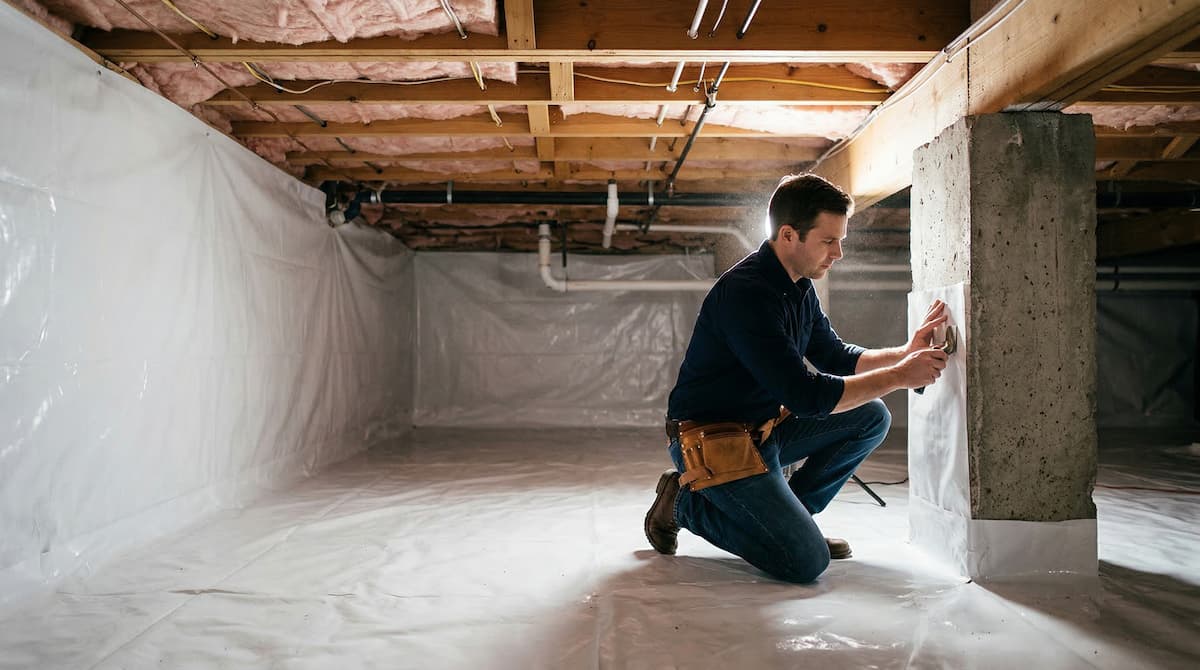
Encapsulation closes that off. A thick polyethylene liner covers the ground and runs up the walls, sealed at the seams and anchored around piers and supports. The goal is simple: keep ground moisture from ever entering the space. When that is done correctly, the crawl space goes from being the dampest spot under your house to a controlled, dry environment.
Some systems also include a dehumidifier, drainage channels if water infiltration is an issue, and sealed vents that stop outside air from bringing in more humidity. The exact setup depends on what your crawl space is dealing with. A home in Ada with standing water after heavy rains needs something different from a home in Edmond that just has high humidity and a musty smell.
Why Oklahoma Crawl Spaces Take on More Moisture Than Most
Oklahoma sits in a climate zone where humidity is a year-round problem, not just a summer nuisance. Ada averages about 42 inches of rain a year, and the wettest stretch runs from April through June, right when temperatures are climbing and outdoor air holds more moisture. That air moves through crawl space vents and drops humidity directly onto the wood frame of your floor.
Then comes the soil. Oklahoma’s native clay absorbs water during wet months and holds it far longer than sandy or loamy soil would. The ground beneath a crawl space in most of central and southern Oklahoma stays damp for weeks after a rainstorm. That moisture evaporates slowly upward, into the crawl space, toward the wood that holds your floor.
Most crawl space problems in Oklahoma homes are not caused by a single dramatic event. They are caused by years of ordinary seasons doing what Oklahoma seasons do, with nothing in place to stop the moisture from accumulating.
Signs Your Crawl Space May Need Encapsulation
Some signs are obvious. Others take longer to connect to what is happening under the house.
A persistent musty smell is the most common early signal. It is more noticeable in rooms close to the floor, and it tends to get worse after rain. That smell is mold or mildew growing on damp wood or insulation in the crawl space. It is not a cosmetic problem. Mold on structural wood is a structural problem.
- Floors that feel soft, spongy, or slightly bouncy, especially over rooms that sit directly above the crawl space
- Energy bills climbing without a clear reason. A damp floor system loses conditioned air faster, and your HVAC works harder to compensate.
- Visible mold, standing water, or condensation on pipes when you look inside the access panel
- Termites or carpenter ants near the foundation. They do not appear randomly. They follow moisture into wood that has already started to soften.
If your home has a basic plastic sheet on the ground but no sealed walls and no drainage, that is a vapor barrier, not encapsulation. It helps, but it does not stop moisture from entering through the walls or from accumulating in the air space. The difference matters in Oklahoma’s humidity.
What Happens When You Leave It Alone
Moisture damage in a crawl space follows a predictable path. It starts with high humidity, which leads to mold. Mold weakens the wood fibers in your floor joists and beams. Weakened wood begins to sag. Sagging beams mean a floor that bounces or dips. By this point, you are no longer talking about encapsulation. You are talking about structural repairs to the wood itself.
Pest damage compounds the problem. Termites move into wood that has already been softened by moisture. Their activity accelerates the deterioration of beams and joists that are already compromised. A crawl space that needed encapsulation three years ago might need beam replacement today.
Encapsulation done before any of that happens is a maintenance decision. Done after wood rot has set in, it becomes part of a larger repair. Those are two very different conversations to have with a contractor.
What the Encapsulation Process Looks Like
A professional encapsulation starts with an inspection of the crawl space to understand what is actually happening down there. Standing water, active mold, damaged insulation, and compromised wood all affect what the system needs to include. This step matters more than most homeowners expect. Two crawl spaces in the same neighborhood can be in very different condition, and the right approach for one is not automatically the right approach for the other.
Once the space is assessed and any standing water is removed, the ground is prepped and the liner installation begins. A quality encapsulation liner is thick, typically 12 to 20 mils, which is several times thicker than a standard plastic vapor barrier. It covers every square foot of ground and runs up the walls, sealed at every seam and wrapped tightly around piers, columns, and support posts. No gaps. No shortcuts at the edges. The whole point is to create a continuous barrier that moisture cannot work around.
Vents are sealed or managed based on whether the crawl space is being converted to conditioned space or kept as an isolated dry zone. In most Oklahoma homes, sealed vents combined with a dehumidifier is the most effective approach, because outside air during summer months carries too much humidity to be useful ventilation.
If water infiltration is a recurring problem, a drainage channel is installed along the perimeter before the liner goes down. That channel directs water to a sump pump that removes it from the space entirely. This is not always necessary, but for homes near creek beds, low-lying lots, or areas that collect runoff, it is the part of the system that makes everything else work.
For most homes, the work takes one to two days. You do not need to leave. There is no heavy equipment, no major disruption to the living space above. The crawl space access hatch is the main entry point, and the crew works below the floor from start to finish. When they leave, the space is sealed, dry, and protected.
Encapsulation vs a Basic Vapor Barrier: What Is the Difference and Does It Matter?
This is the question that comes up most often, and it is worth answering directly. A vapor barrier is a thin plastic sheet, usually 6 mils thick, laid on the ground of the crawl space. It slows moisture evaporation from the soil. In a dry climate with mild humidity, it can be enough. Oklahoma is not that climate.
A vapor barrier does not seal the walls. It does not control the air in the space. It does not stop humid outside air from entering through vents or foundation gaps. In Oklahoma’s wet springs and humid summers, ground moisture is only one part of the problem. The other part is airborne humidity moving through the space and condensing on wood surfaces. A thin sheet on the ground does not address that at all.
Encapsulation goes further on every dimension. The liner is thicker and runs up the walls to create a sealed envelope. The system includes a plan for air management, whether that is sealed vents, a dehumidifier, or both. If water entry is a problem, drainage is part of the system. The crawl space is treated as a controlled environment, not just a space with a sheet of plastic on the floor.
Many older Oklahoma homes have a vapor barrier that was installed years ago and is now torn, shifted, or degraded. This is especially common in pier and beam homes, where the crawl space is the primary moisture path into the structure. That barrier gives homeowners a false sense of protection. If your home has had a basic vapor barrier for more than ten years, or if you are still noticing musty smells or soft floors despite having one, a full inspection will tell you whether what is down there is still doing its job.
People Also Ask About Crawl Space Encapsulation
How is encapsulation different from a vapor barrier?
A vapor barrier is typically a thin plastic sheet laid on the ground. It reduces ground moisture but does not seal the walls, control humidity in the air, or manage water that enters from the sides. Encapsulation is a complete system: thicker liner, sealed walls, and often a dehumidifier or drainage. In Oklahoma’s climate, a vapor barrier alone is usually not enough.
Will encapsulation fix my musty smell?
In most cases, yes. The musty smell comes from mold and mildew growing in a damp environment. Once the moisture source is eliminated and the crawl space dries out, the smell dissipates. If mold has spread across wood surfaces, those areas may need treatment before encapsulation for the smell to go away completely.
Does encapsulation help with energy costs?
Yes. A damp crawl space compromises floor insulation and allows conditioned air to escape more easily. Once the space is sealed and dry, insulation performs better and the floor above holds temperature more effectively. Many homeowners notice a reduction in heating and cooling costs after encapsulation.
How long does crawl space encapsulation last?
A properly installed encapsulation system with a quality liner typically lasts 20 years or more. Periodic inspection ensures the liner stays sealed and the dehumidifier, if installed, is functioning correctly. Pierman inspects every system we install and stands behind the work.
Think Your Crawl Space Needs Attention?
Pierman has inspected crawl spaces across Pontotoc County and central Oklahoma for years. We know what moisture damage looks like at every stage. The inspection is free, the estimate is written, and we will tell you exactly what is happening under your home before recommending anything.
Prefer to plan ahead? Request your free Pierman inspection online and we will reach out to schedule.