
So you’ve noticed a horizontal crack in your basement or foundation wall and, even worse, it is bowing inward. Bowing walls can become a serious structural problem if left unchecked, with possibilities including the eventual collapse of the foundation wall.
Since you can’t just ignore the problem and hope it fixes itself, or at least doesn’t get worse, the question becomes what do you do to solve it.
Depending on the extent of the damage, the wall might have to be stabilized or even rebuilt. If you catch it early enough, however, filling the crack might be sufficient. That is, of course, if you remove the cause of the problem in the first place.
Causes of Bowing Basement Walls
There are a number of potential causes for bowing basement or foundation walls, although one often stands out above the others. Some of the other causes of bowing walls:
- Poorly Constructed Walls: If the wall wasn’t well constructed or was made of substandard materials, it might not be able to support the pressure placed upon it.
- Tree Roots: If you have trees planted too close to the foundation, roots could end up pressing into the wall. This force could cause it to start to bow inward.
- Expansive Soils: Expansive clay soils have large shrink-swell cycles. As they get wet, the soil expands, and as it dries it contracts. This constant changing in the pressure applied by the soil upon the wall can cause it to crack and bow.
The Main Cause of Bowing Walls: Hydrostatic Pressure
There is a reason why gutters and downspout extensions exist: too much water is bad for your home’s foundation. While the most obvious sign of this is water infiltration that can lead to basement flooding, the effects of water around your foundation go beyond that.
As water accumulates around your foundation walls, the pressure placed upon the walls builds. Eventually, this pressure will cause the wall to begin to crack and bow inward.
How Do You Stop Hydrostatic Pressure?
The best way to reduce hydrostatic pressure is obvious: reduce the amount of water accumulating around your foundation.
So how do you keep water away from your foundation?
The Basics: Clean Gutters and Downspout Extenders
If you don’t have gutters, all of the rain that hits your roof will run down and collect near your foundation. Similarly, if your gutters are clogged, the water will overflow and spill out at one specific point near your foundation.
That is why clean gutters along with downspouts that drain a sufficient length from your house are crucial to water management
Exterior Waterproofing
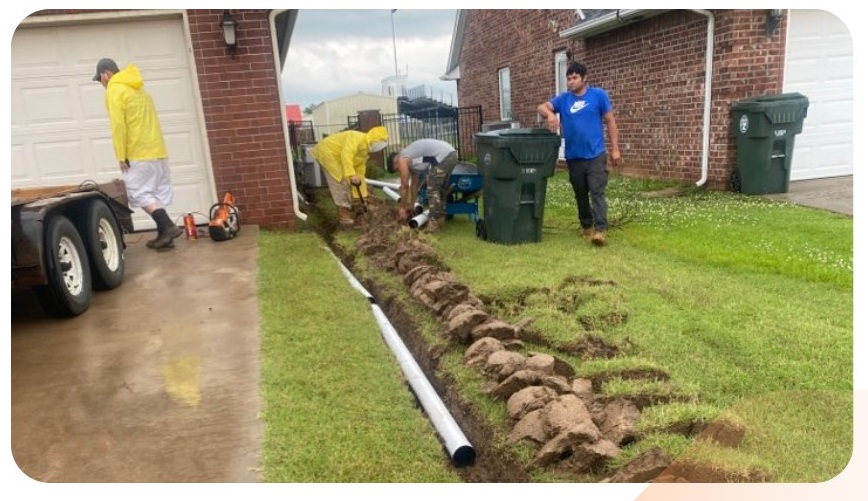
When gutters and downspout extenders aren’t enough, it might be time to consider installing an exterior drainage system to direct the water away from your foundation to a place in your yard where it will cause less damage.
With a French drain system, a trench is dug and a perforated pipe is laid, surrounded by gravel to improve the drainage and keep the surrounding soil from clogging the pipe. The pipe is then used to direct the water away from the place where it can do harm (in this case the foundation).
In Need of Exterior Waterproofing Solutions in Oklahoma? Give Pierman a Call
Whether you call it a French drain, a trench drain or just plain drain tile, the exterior waterproofing pros at Pierman are experts at installing exterior waterproofing systems to stop water problems from affecting your home. Contact us today to learn more.
