
If you call three different foundation repair companies for quotes, there is a good chance that they will each pitch you a different foundation piering system. Most will focus on the price or the strength of material used, generally concrete or steel, because those are the easiest elements to compare. One question you should ask, though, is “Are they concentric piers or eccentric piers?”
What Is the Difference Between Concentric and Eccentric Piers?
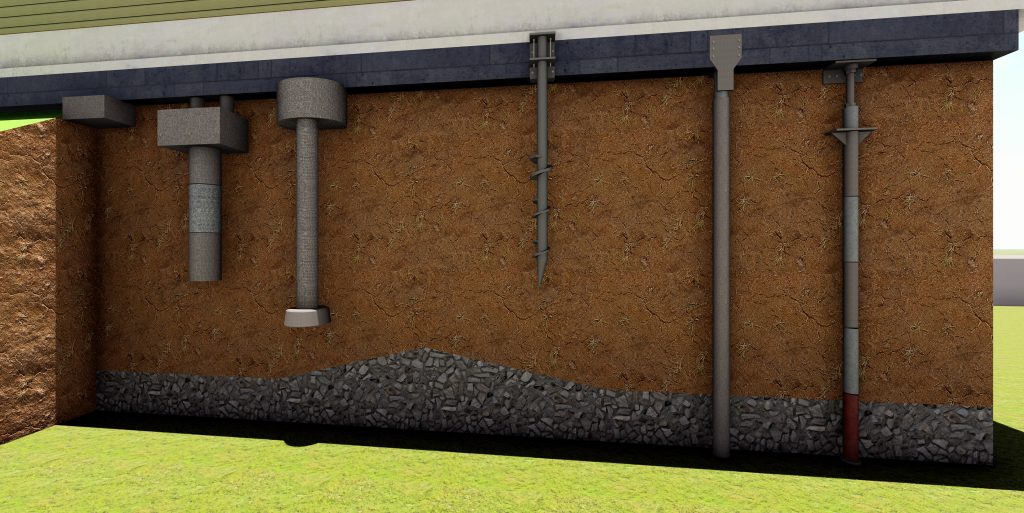
The technical definition of a concentric pier is a pier in which the axis is aligned with the applied load. With an eccentric pier, the axis is offset.
OK, but what does this mean in practice?
Concentric piers are placed directly beneath the footing, with the footing resting on top of the pier’s bracket. The pier then goes straight into the ground.
Eccentric piers often use L-shaped brackets, with a small portion that extends beneath the footing. The pier itself, however, is attached alongside the footing. This difference, the loading not being directly in-line with the pier, creates several notable disadvantages.
What Are the Advantages of Using Concentric Piers?
- Improved Efficiency of Strength: Because the load of the home is pushing down directly on the pier, its strength can be devoted to supporting the structure above. Systems that apply the load off-center introduce bending forces that reduce efficiency. This also creates a potential failure point, particularly in lower-quality or lightly reinforced piers.
- Better for Your Home’s Footing: If the pier is directly beneath the footing, it mimics the job that the soil beneath it is supposed to do (and which the footing was designed for). This is not the case for eccentric piering systems. Because of how they are loaded, the load transferred into the footing can fall disproportionately on its edge. This can lead to spalling, cracking and deterioration, especially in residential footings.
- Better Crack Avoidance: The stresses placed on the footing can also be transferred to foundation walls through slight bending or rotation at the footing, reopening cracks even if the foundation remains supported.
Ensure They Are The Right Kind Of Concentric Piers
One advantage that eccentric piers do have is that you more or less know what you are going to get.
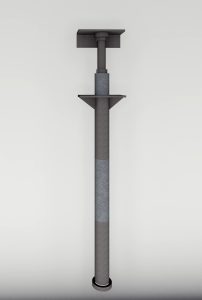
While the quality of the materials and engineering behind the piers can, and do, vary, you generally get a steel pier that can reach down to a load-bearing strata of soil.
That isn’t necessarily the case with concentric piers.
Many concrete-only types of piers, from shoring pads to concrete pilings to poured concrete piers, are concentrically loaded. Many of these often fail to extend all the way to a load-bearing strata of soil. They might help in the short term, but don’t provide long-term stability for home.
At Pierman, we use the concentrically loaded Utility Pier system. Each section consists of a steel casing with a concrete core. As each section is sunk into the ground, another is attached on top of it until the bottom pier reaches a load-bearing strata of soil. The interlocking system along with the concrete core both prevents deflection and improves buckling resistance.
Need Foundation Repairs in Oklahoma? Give Pierman a Call
At Pierman, we believe in using materials that provide long-lasting foundation repair solutions while also avoiding causing one problem while fixing another. If you believe that your home’s foundation has begun to shift and settle, contact us today.
