
Discovering foundation problems in your home can be stressful. Concerns about structural integrity and repair costs can feel overwhelming, especially when you don’t know what to expect. The cost of repairs can vary significantly based on factors such as the type of foundation, the type and extent of damage, and the root cause of the issue. While every home is different, this guide outlines the general steps involved in the foundation repair process, helping you understand what to expect.
One Note: The First Step is Yours to Take

Foundation contractors and structural engineers can’t help unless you reach out! That means it’s up to you to recognize the warning signs early. Keep an eye out for moisture issues in your crawl space after heavy rain, and don’t ignore cracks in your walls—especially if they seem to be growing. Catching these problems early may provide more repair options and help prevent further damage.
1. Professional Inspection
If you spot a potential foundation problem, call a professional for an inspection. A structural engineer or foundation repair contractor will assess the damage and determine the best course of action.
The Inspection Process – an Overview
- Assessing the Damage & Potential Causes: The foundation professional will examine your foundation and determine the extent of the damage, including the severity and direction of any cracks, noting as well factors such as the type of foundation, soil conditions, and the presence of water or moisture issues.
- Recommending a Repair Method or Methods: Depending on the assessment, the repair method can range from simple to complex. For minor cracks, sealants and masonry patches can be used. If water is a problem, improving drainage and waterproofing might be necessary. For more significant issues, the contractor might recommend underpinning the foundation with piers or pilings to stabilize it. In some cases, the contractor or engineer might lay out multiple options. In others, there might be only one option to correctly address your foundation problem.
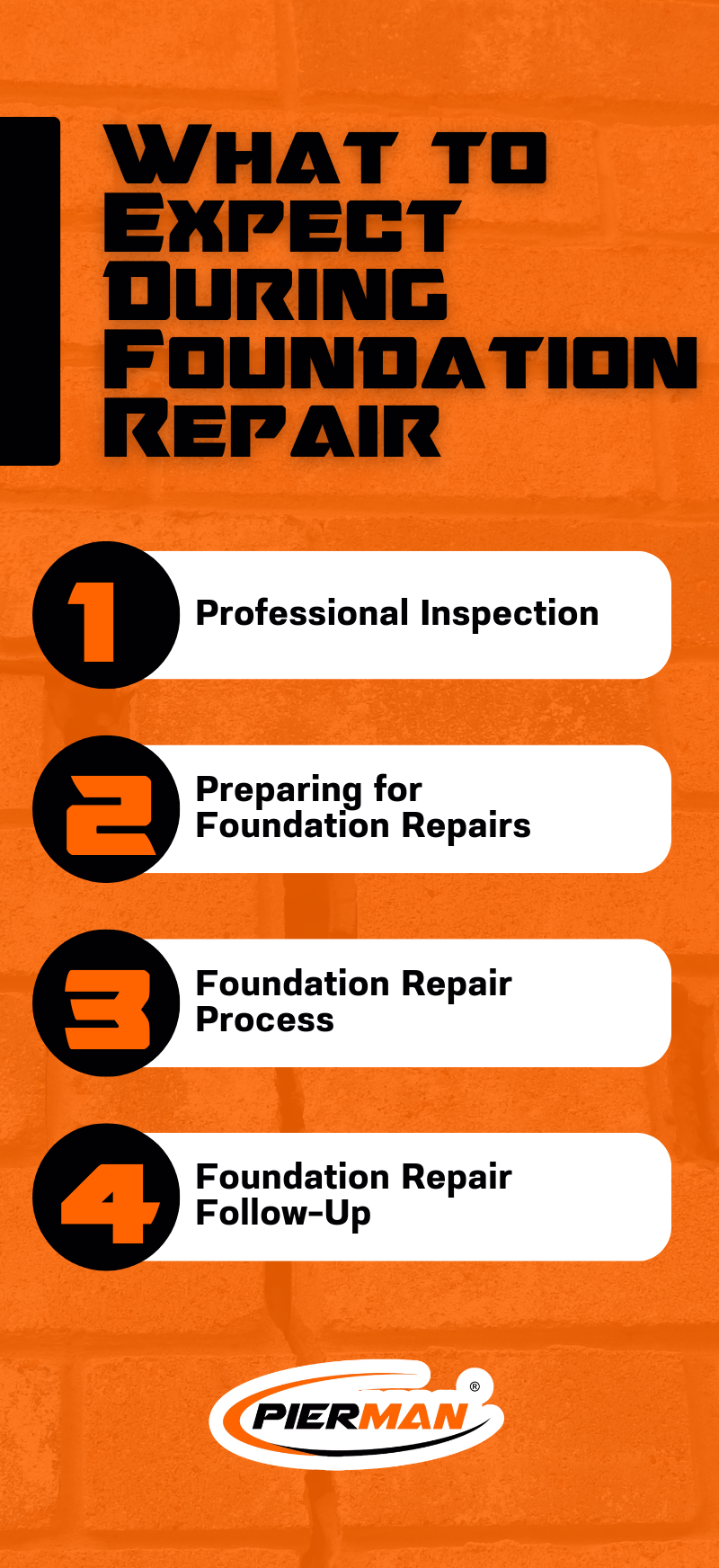
2. Preparing for Foundation Repairs
Before repairs begin, an essential part of the foundation repair process involves preparing the site for construction. This often includes:
- Obtaining Permits: While not all foundation repairs require permits, some do. Reputable contractors will handle the permit process to ensure compliance with local regulations. They should know the rules of the cities they operate in as well as those cities’ permitting processes, so having them handle the permitting will be more efficient than trying to navigate them yourself.
- Site Preparation: Depending on the repair type, this may involve excavating around the foundation, clearing crawl spaces, or making areas accessible for workers. For piering projects, especially for slab or basement foundations, this may involve excavating around the foundation, removing landscaping, and ensuring the area is safe for workers. The same goes for some drainage projects. For pier and beam repair, it means preparing the crawl space to allow for the replacement of any damaged piers, beams or floor joists. This step will likely be minimal for crack repair and other smaller projects in which adding or repairing structural components are not necessary.
3. Foundation Repair Process
With preparations completed, your foundation repair work can begin. The steps will vary based on the solutions being implemented, but typically include the following:
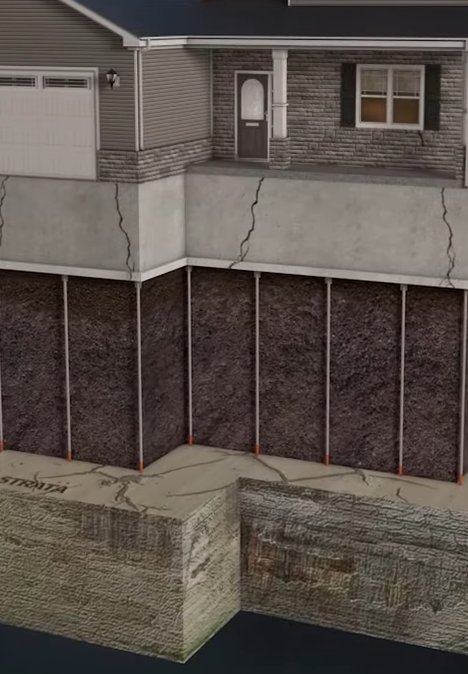
- Executing the Repairs: The repair work follows a detailed plan based on the inspection findings. For crack repairs, epoxy or polyurethane foam may be injected to seal and reinforce the damaged areas. If drainage issues contribute to the foundation problem, solutions such as installing French drains or sump pumps may be necessary to redirect water away from the home. Underpinning methods may involve using hydraulic jacks to carefully lift the house back to its original level before placing concrete piers, steel piers, or helical piers to stabilize the foundation. For pier and beam foundations, repairs may include replacing deteriorated piers, beams, or floor joists to restore structural integrity.
- Monitoring the Repairs: Throughout the foundation repair process, it’s important to monitor the work to ensure that the foundation is properly stabilized and the house is leveled correctly.
- Restoration and Clean-Up: Once repairs are complete, any excavated areas will be need to be backfilled, landscaping may be restored, and any secondary damage to the interior or exterior of the home will be addressed.
4. Foundation Repair Follow-Up
Foundation repair doesn’t end when the work is done. Follow up steps include:
- Inspections: Follow-up inspections by the contractor or a structural engineer are crucial to ensure the repairs have held and the foundation remains stable.
- Maintenance: After repairs are made, maintenance is key to preventing future foundation problems. This includes monitoring for new signs of damage and maintaining proper drainage.
- Warranty Considerations Many foundation repair companies offer warranties on their work. Homeowners should ensure they understand what is covered and for how long. If any of the covered work fails, contact them to have the repairs corrected.
A Strong Foundation for Your Home’s Future
The ultimate goal of foundation repair is a safe, stable home—and that starts with choosing the right contractor. At Pierman, we have the expertise to diagnose and repair foundation issues, no matter the type of foundation or severity of damage. If you’re in our Oklahoma service area and have noticed signs of foundation trouble, don’t wait. Contact us today for a professional inspection and a tailored repair plan to protect your home for years to come.
