

Cracks in brick walls are fairly common. That doesn’t mean they aren’t concerning, however. But what differentiates cosmetic cracks from masonry problems from foundation problems? In large part width, direction and other associated damage.
Is it Just a Hairline Crack?
Hairline cracks sounds like the least concerning, and by and large they are. Anything from temperature changes to material shrinkage can cause these narrow, sometimes barely perceptible cracks to form in masonry walls. Minor settlement can also be to blame.
So long as the crack remains that narrow, it isn’t a cause for concern. If you notice it growing, however, the problem causing the crack is ongoing, meaning that hairline is unlikely to stay a hairline for long. If you are concerned, you can mark and measure the width of the crack, checking periodically to see if it is growing.
What Direction Is The Crack in the Brick Wall Going?
Horizontal Cracks
If a below-grade masonry wall has a horizontal crack, the cause is often pressure applied from the soil outside. This is a serious structural issue. But what about on above-ground brick walls?
Horizontal cracks low on brick walls that extend underground still could be caused by this lateral pressure. These cases, as well as others that might be associated with bowing or leaning walls, such as structural overloads, should be addressed.
If the crack runs along the joint between the brick and mortar, the problem might be a more common type. Mortar typically doesn’t last as long as bricks, and over time the mortar can become damaged and weakened. If this is the case, contacting a masonry technician to repoint the bricks (essentially replacing the outer portion of the mortar), might be the best option.
Vertical Cracks
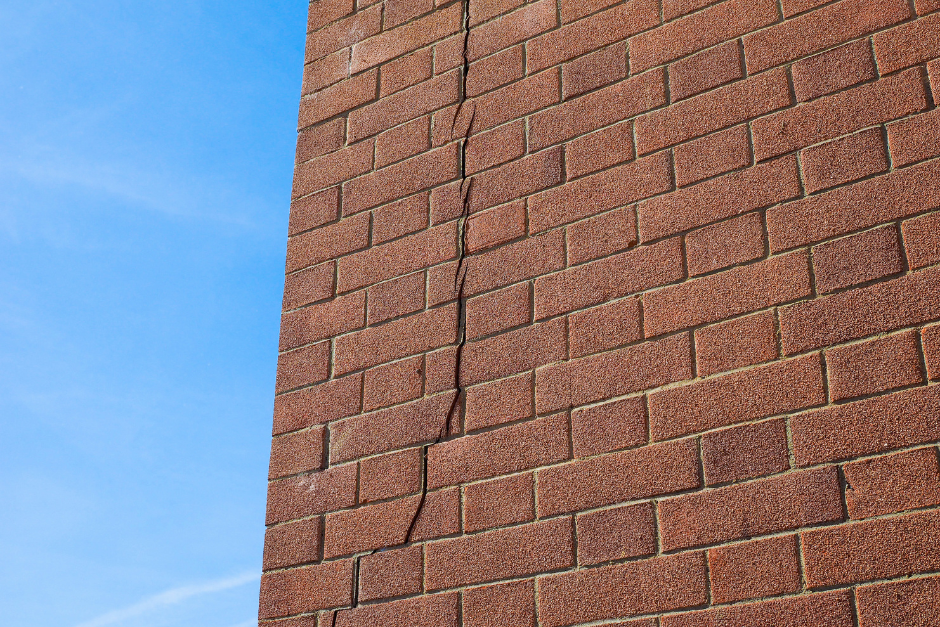
Vertical cracks are those that extend upward with few or no stair steps. In practice this means the cracks will often extend through the bricks themselves. In many cases these cracks are a sign of uneven settlement, which is typical of foundation problems. Width is once again important here, as is the question of whether the crack is growing. Typically these cracks will get wider as they move up the wall as they are caused by one side of the house settling faster than the other side (or middle).
Stair Step Cracks
Like vertical cracks, stair step cracks often signal that foundation settlement has taken place. They are called stair step because they usually occur heading in a diagonal direction in the mortar between the bricks, giving them the look of stairs.
Similar to vertical cracks, stair step cracks will also often be wider at the top than the bottom. The exception is when the middle of the house is settling faster than either side.
Just like vertical cracks, if you have a stair step crack in your brick wall that is wider than a hairline, it is a good idea to get the cracks (and your foundation) examined by a professional.
Other Damage
Efflorescence: The white, powdery deposits sometimes found on walls are an indication of water issues as they are left behind when water evaporates.
Spalling: Bricks that are peeling or chipping rather than cracking indicate issues that are more masonry related. This is sometimes caused by water ingress followed by freezing and thawing. Contact a masonry professional to fix the affected bricks.
Seeing Worrying Cracks in Your Brick Walls? Contact Pierman
If you live in Oklahoma and are seeing cracks in your brick walls that could indicate foundation damage, contact Pierman Foundation Services today. We can inspect the cracks and your foundation and let you know if there is any cause for concern and, if there is, how best to fix it.
