
Foundation repair is not a one-size-fits-all type of business. This is not just because foundation problems have different causes and levels of severity but also because there are multiple different types of foundations. Which type of foundation you have will determine in part what type of foundation repairs you require.

Slab Foundations
These are the simplest foundations and perhaps the least expensive to construct. The base of the home is a poured concrete slab, with a footing around the perimeter. It has no basement and no crawl space.
Often foundation problems in these homes are caused by the foundation shifting or settling. The classic markers of foundation problems apply. Cracks may appear, either in walls, ceiling or the slab foundation floor itself. Floors can become slanted. Doors and windows may stick. Chimneys can tilt and stoops can pull away from the house.
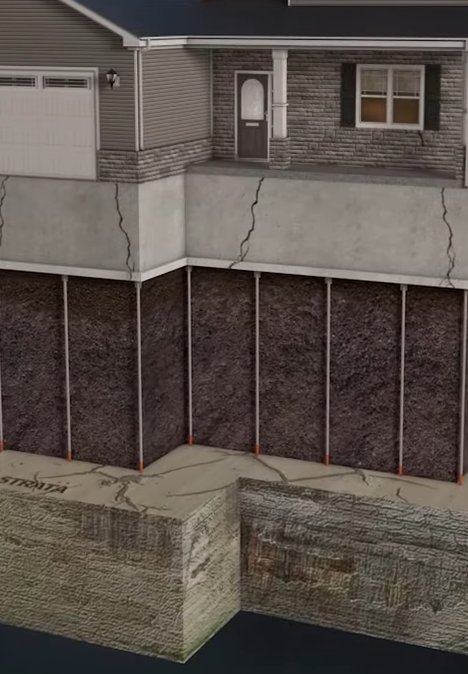
When significant settlement-related foundation problems occur in a slab foundation, an underpinning system will often be used. Piers usually made of steel, concrete or both will be sunk into the soil to a depth where the soil is strong enough to support the weight of the foundation. The foundation is then hydraulically lifted and leveled and the load of the home is transferred onto the piers, giving it the kind of a stable base that the ground immediately beneath it couldn’t provide.
Basement Foundations
This one is pretty simple. Do you have a basement beneath your home? If so, you have a basement foundation. It shares some similarities with slab foundations, with both having footings and a slab floor. In a basement foundation, however, the footings below the foundation walls, which are often made of block, rather than being part of the slab floor.
They do share many of the same foundation problems and solutions when it comes to settlement-related issues. The addition issue that basement foundations face, however, is the impact of the soil on the basement walls. If the pressure exerted by the soil gets to be too much, the walls can begin to bow and crack.
Given that this issue is often caused by excess water in the soil surrounding the house, fixing the water issues is important along with fixing the wall itself. Sometimes adding gutters and downspout extenders can help if the home doesn’t already have them. Other times the situation could call for installing a French drain in the yard. This directs the water away from your foundation walls to prevent it from causing damage to your home (or seeping into your basement).
Pier & Beam Foundations
Pier and beam foundations are built on a series of supports (the piers) that either sit on the ground or are sunk into it. Beams then rest upon the vertical support piers and floor joists are then supported by those beams.
Because the piers elevate the beams off the ground, pier and beam foundations form a crawl space beneath the home.
Pier and beam foundations can experience some of the same symptoms of foundation problems as slab and basement homes because sunken or weakened piers or rotting beams can cause some of the same issues as uneven foundation settlement for a slab or basement foundation. The causes and repairs, though, are somewhat different.
Rotting floor joists can also make floors sag or appear spongy.
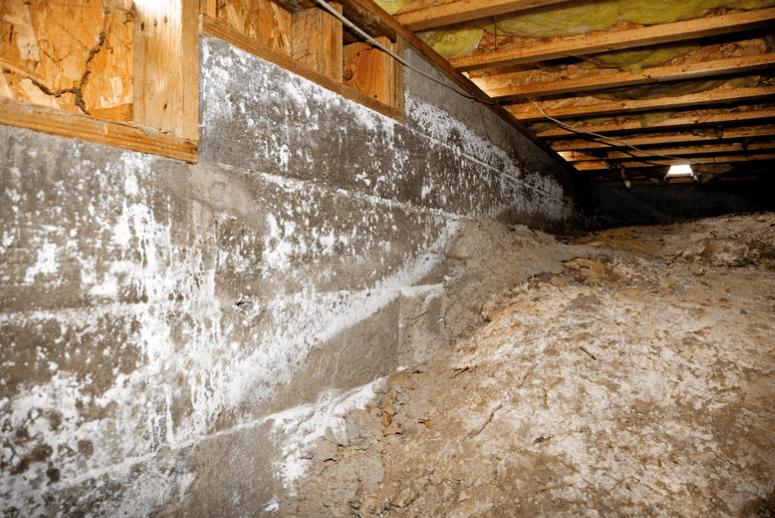
Piers, if they are no longer supporting the beams properly, might need to be shimmed or replaced. Age or wood rot caused by moisture in the crawl space could weaken the beams or floor joists to the point where they need additional support or replacement.
Also, while all pier and beam foundations have crawl spaces, not all foundations with crawl spaces are pier and beam. Stem wall foundations, for instance, have a foundation wall above the footings that creates a crawl space. They rely on that wall to support the beams and joists rather than piers. Like all crawl spaces, however, it can be susceptible to moisture issues.
Are You Experiencing Problems With Your Foundation?
If you live within our Oklahoma service area and are having problems with your foundation, contact Pierman today. We offer solutions for all of the foundation types listed as well as crawl space encapsulation and exterior waterproofing that can prevent water-related foundation issues.