
Crawl space moisture problems usually announce themselves from inside the house, not from below it. A smell you notice in spring. A room where the surface underfoot has started to give slightly. A door on the ground floor that stopped latching the way it used to. These are not separate issues. They are the same problem showing up in different places.
Oklahoma’s combination of clay soil, humid summers, and wet springs makes crawl space moisture one of the more common problems Pierman encounters across central and southern Oklahoma. According to NOAA climate data for Oklahoma, the state averages 34 inches of precipitation annually, with Ada and south-central Oklahoma receiving closer to 42, and the heaviest stretch arriving in spring when clay soil has the least capacity to drain it. The issue is not always dramatic. In many homes, it builds slowly over years before the floor above shows anything. Knowing what to look for lets you catch it before the wood beneath your home has already paid the price.
What You Need to Know
- Crawl space moisture usually shows up inside your home first, as musty smells, soft floors, or sticking doors, before you ever see anything in the crawl space itself.
- Oklahoma’s clay soil holds water long after rain stops, and summer air brings humidity through crawl space vents. Both feed the same problem from different directions.
- Wood rot and mold develop silently. By the time a floor feels soft, the beam beneath it has usually been deteriorating for months.
- A crawl space inspection is the only way to know what is actually happening below the floor, and Pierman offers it free.
Why Oklahoma Crawl Spaces Are Prone to Moisture Year-Round
Between the ground and your living floor sits a space that most Oklahoma homeowners rarely think about. In Oklahoma, that position puts them in direct contact with two reliable moisture sources that never fully stop.
Ground moisture is the first source. Oklahoma’s native clay absorbs water and holds it long after rain has stopped. The ground beneath a crawl space in most of central and southern Oklahoma stays damp for weeks following a wet period. That moisture evaporates upward, slowly and steadily, into the space and onto whatever wood it reaches first.
Air is the second source, and it catches most homeowners off guard. Summer in Oklahoma means warm, humid outdoor air moving through crawl space vents. When that air hits the cooler surfaces inside, it condenses. Water forms on floor joists, beams, and supports. This happens on days with no rain at all. It happens every summer. Over years, that condensation is as damaging as ground moisture, and a lot of homeowners never connect it to the musty smell they notice inside the house.
Signs Inside Your Home That Point to the Crawl Space
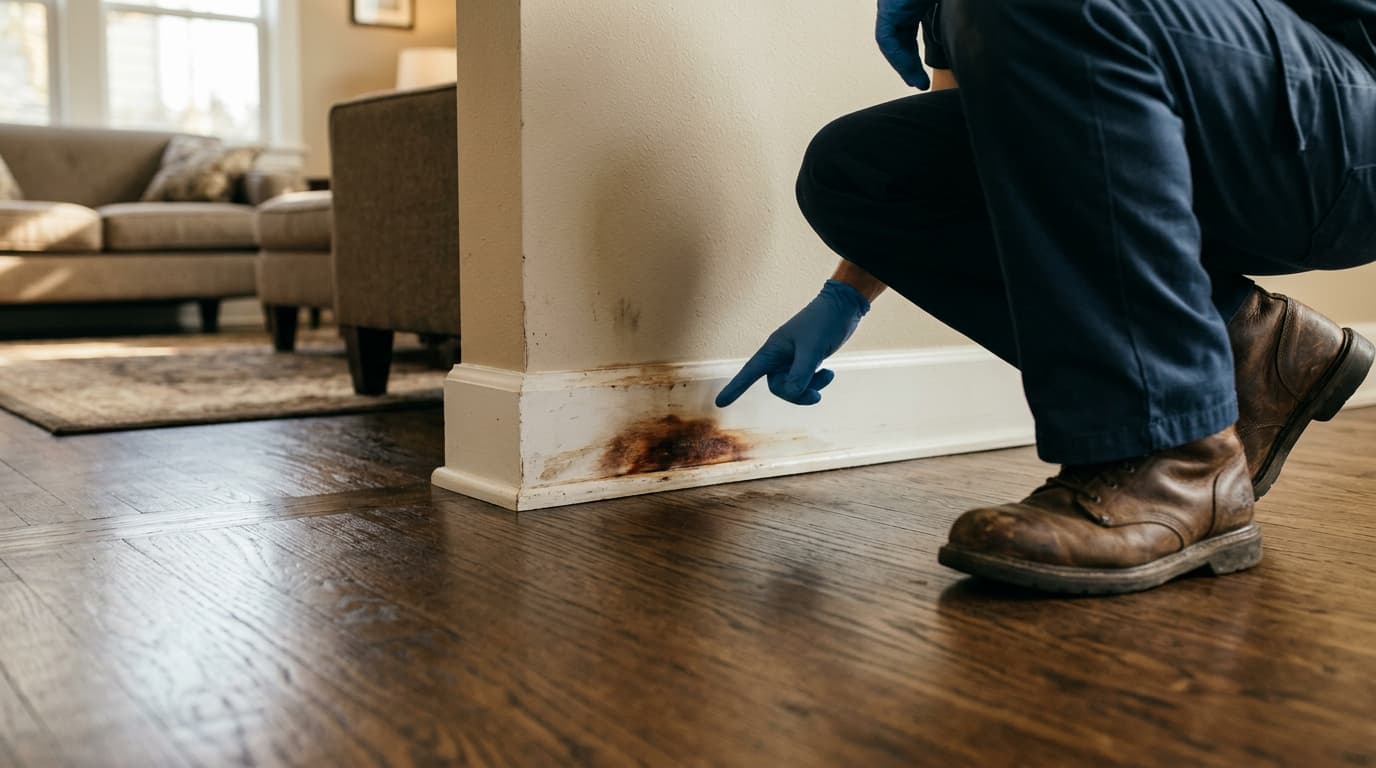
None of these signs announce themselves loudly. They show up at floor level, in doorframes, at the baseboard. Easy to write off one at a time. Together, they point to the same place.
A musty smell that worsens after rain. This is the first sign most Oklahoma homeowners notice. The smell is mold or mildew growing somewhere below the floor on damp wood or insulation. This is not a ventilation issue you can air out. The smell gets worse every wet season because the moisture feeding it never fully goes away.
Floors that feel soft, spongy, or slightly springy. A floor that has a little too much give underfoot is telling you the support beneath it has weakened. Wood that has absorbed moisture for long enough starts to lose its density. What lies above begins to flex in ways it was not designed to. This happens most noticeably in rooms directly above the crawl space.
Doors on the ground floor that stick or no longer latch properly. When the floor system shifts due to weakened supports or settled piers, door frames go slightly out of alignment. A door that used to close cleanly now catches at the top or bottom. In a pier and beam home, this often points directly to crawl space deterioration rather than foundation settlement.
Visible gaps between baseboards and the floor. Separation at the floor line means the floor has moved relative to the wall. In many Oklahoma homes, this is one of the last signs to appear before a professional inspection confirms what has been developing underneath.
What You Might Actually See If You Look Into the Crawl Space
Homeowners open the access panel once and never look again. That is understandable. The space is cramped, dark, and not inviting. But a look inside with a flashlight can tell you a lot before calling anyone.
Dark staining on floor joists is moisture that has been sitting long enough to discolor the wood. Black or gray patches are mold. Wood that looks clean but feels soft when pressed is early-stage rot, and it is more dangerous than it looks because the interior of the wood may be further compromised than the surface suggests.
Standing water after rain is an obvious problem. Less obvious is condensation on pipes and supports on a dry day, or insulation that has fallen from between floor joists and is lying on the ground. Fallen insulation usually means it absorbed moisture and got too heavy to stay in place.
Pest activity is also worth noting. Termites and carpenter ants are drawn to moisture-damaged wood. Finding them in or near the crawl space almost always means the wood is already in a compromised state.
How Moisture Damage Progresses if Nothing Changes
Moisture damage follows a predictable sequence. High humidity leads to condensation on wood. Condensation creates the conditions for mold. Mold begins breaking down the wood fibers in floor joists and beams. As the wood softens, pests find it easier to establish themselves and accelerate the damage. Eventually the floor system loses enough support that the floor above starts to show it.
Each stage of this process is cheaper to fix than the next one. A space with high humidity but no visible damage is a dehumidifier and encapsulation job. Add early mold and surface rot, and treatment comes before encapsulation. Rotted floor joists mean beam or joist replacement before the liner can protect what remains. Pest damage adds another layer on top of all of that.
Nobody calls a foundation contractor too early. The homeowners who call too late are the ones replacing wood that could have been saved a year or two prior for a fraction of the cost.
Fixing Crawl Space Moisture in Oklahoma: What the Solution Actually Looks Like
What the solution looks like depends on what is actually found inside the space. A professional inspection identifies the moisture source and the extent of any existing damage before recommending anything.
For most Oklahoma homes, crawl space encapsulation is the core of the fix. A thick polyethylene liner covers the ground and runs up the walls. Vents are sealed to stop humid outdoor air from entering. A dehumidifier controls the air inside the space year-round. When water infiltration is recurring after rain, drainage channels and a sump pump go in before the liner does.
If wood rot has already set in, damaged beams or floor joists need to be replaced before encapsulation can do its job. Sealing moisture out of a space where the wood is already compromised protects what remains but does not reverse existing damage.
Pierman assesses each crawl space on its own condition. What a home in Ada needs after a wet spring is not necessarily what a home in Norman needs after years of deferred maintenance. The inspection is the starting point, not the sales pitch.
What Oklahoma Homeowners Ask About Crawl Space Moisture
How do I know if my crawl space smell is mold or something else?
Mold has a damp, earthy smell that gets noticeably worse after rain and lingers even on dry days. A smell that comes and goes with seasons is almost always moisture-related. If it has gotten worse over the past year, something is progressing below the floor.
Can I just run a dehumidifier in the crawl space without encapsulating?
A dehumidifier alone will reduce humidity in the air space but will not stop ground moisture from evaporating upward or outdoor air from entering through open vents. In Oklahoma’s climate, running a dehumidifier in an unencapsulated crawl space is managing the symptom without addressing the source. It may slow the problem but will not solve it.
My floor feels fine. Could my crawl space still have a moisture problem?
Yes. Early-stage moisture damage does not show on the floor surface. Mold can be active on joists and beams for one to two years before the floor above registers any change. If your home is over 20 years old and has never had a crawl space inspection, the absence of obvious floor symptoms does not mean the space is clean.
How long does crawl space encapsulation take?
For most homes, one to two days. Larger spaces or ones with drainage work added will take longer. Pierman gives a clear scope and timeline before any work starts, and the space is fully usable again immediately after the job is complete.
Noticed Any of These Signs in Your Home?
Pierman inspects crawl spaces across Pontotoc County, Ada, Norman, and throughout central and southern Oklahoma. We look at what is actually there, tell you what it means, and let you decide what to do next. The inspection is free. No obligation.
Prefer to plan ahead? Request your free Pierman inspection online and we will reach out to schedule.