
Water can infiltrate any kind of foundation. Perhaps not to the same degree — basements are far more likely to flood than slab-on-grade homes — but all homes are susceptible.
If you want to know where water is entering your foundation, that requires an investigation. We can, however, lay out some of the likely culprits for each of the types of foundation.
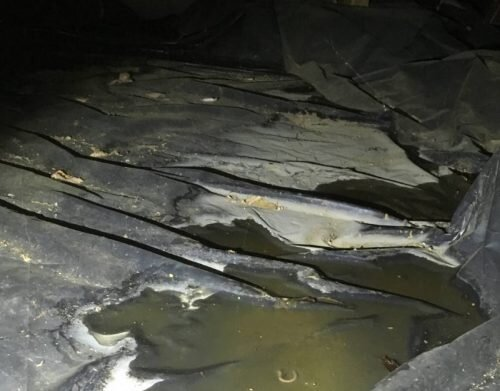
The Common Denominator: Rising From Below
The one thing all that foundations have in common is a floor, that point where the foundation meets the dirt below. And if that dirt is saturated with water, it can find its way into your foundation.
The easiest path comes with crawl space foundations. That is because generally the floor is just, well, the dirt itself. If a rising water table meets your foundation floor, well, your crawl space is going to have water problems.
The cement slab floors of basement and slab on grade homes offer more protection. Cracks, however, do occur. And if water finds its way into cracks in the slab, you will likely end up with water issues.
Cove Joints: The Weak Point In Keeping Water Out
The cove joint is the area where the basement wall meets the floor slab. In homes with poured foundations, this joint is created because the slab and wall are poured separately. Since they are not bonded into one solid piece, the cove joint becomes a natural weak spot where water can enter.
Water intrusion at the cove joint can occur for several reasons:
- Hydrostatic pressure pushes water up from the soil beneath the slab or from the outside along the wall.
- In poured concrete walls, the cove joint is simply the easiest path of least resistance when groundwater builds up.
- In block (CMU) walls, water often seeps into the hollow cores of the blocks. It drains downward inside the wall and accumulates at the bottom. From there, it typically emerges through the inside edge of the cove joint, making the problem look like it’s coming from the floor/wall seam even though it started in the wall.
Even though slab-on-grade homes don’t have a traditional basement cove joint, they still have a slab-to-wall cold joint around the perimeter where the floor slab was poured separately from the foundation wall. If the exterior soil level sits at or above the height of the slab—or if water pools against the home—moisture can enter through this joint just like it does in a basement.
Hydrostatic pressure or simple buildup of surface water can push moisture through the tiny gap between the wall and slab, leading to damp flooring, wet carpet edges, or visible seepage along exterior walls. In short: the same weak spot exists; it just goes by a different name.
Wall Cracks: Water Forcing Its Way In
Foundation wall cracks are not only often the entry point for water but also are sometimes caused by the water as well.
If a foundation wall is cracked because of foundation settlement or other issues, that crack becomes a path of least resistance for water to enter the house.
If the hydrostatic pressure from the water in the soil becomes too great for the foundation wall, it will crack and begin to bow inward. These cracks then become another access point for water to enter your foundation.
Need Waterproofing Work Done in Oklahoma? Contact Us Today
Regardless of where the water is entering your foundation, the need to keep it out is constant. From exterior drainage systems to crawl space encapsulation to a basement drainage system with a sump pump, we have waterproofing options that can keep water from impacting your living space. Contact us for a free waterproofing estimate.
