
Walk into the crawl space of most Oklahoma homes and you will find one of two things: a thin sheet of plastic lying on the dirt, or nothing at all. The plastic sheet is called a vapor barrier. A lot of homeowners assume that if they have one, they are covered. In Oklahoma’s climate, that assumption is worth examining.
A vapor barrier and crawl space encapsulation are not interchangeable terms. One is a sheet of plastic on the ground. The other is a sealed system that manages moisture from every angle. That distinction matters more in Oklahoma than almost anywhere else, because the humidity, clay soil, and seasonal swings here push crawl spaces harder than a thin plastic sheet is built to handle.
What You Need to Know
- A vapor barrier is a thin plastic sheet on the ground. It slows ground moisture but does not seal the walls or control airborne humidity.
- Encapsulation is a complete system: thicker liner, sealed walls, managed ventilation, and often a dehumidifier.
- In Oklahoma’s humid climate, a vapor barrier alone is rarely enough. Ground moisture is only part of the problem.
- If your vapor barrier is more than 10 years old, torn, or you are still noticing musty smells, it is no longer doing its job.
What a Vapor Barrier Actually Does
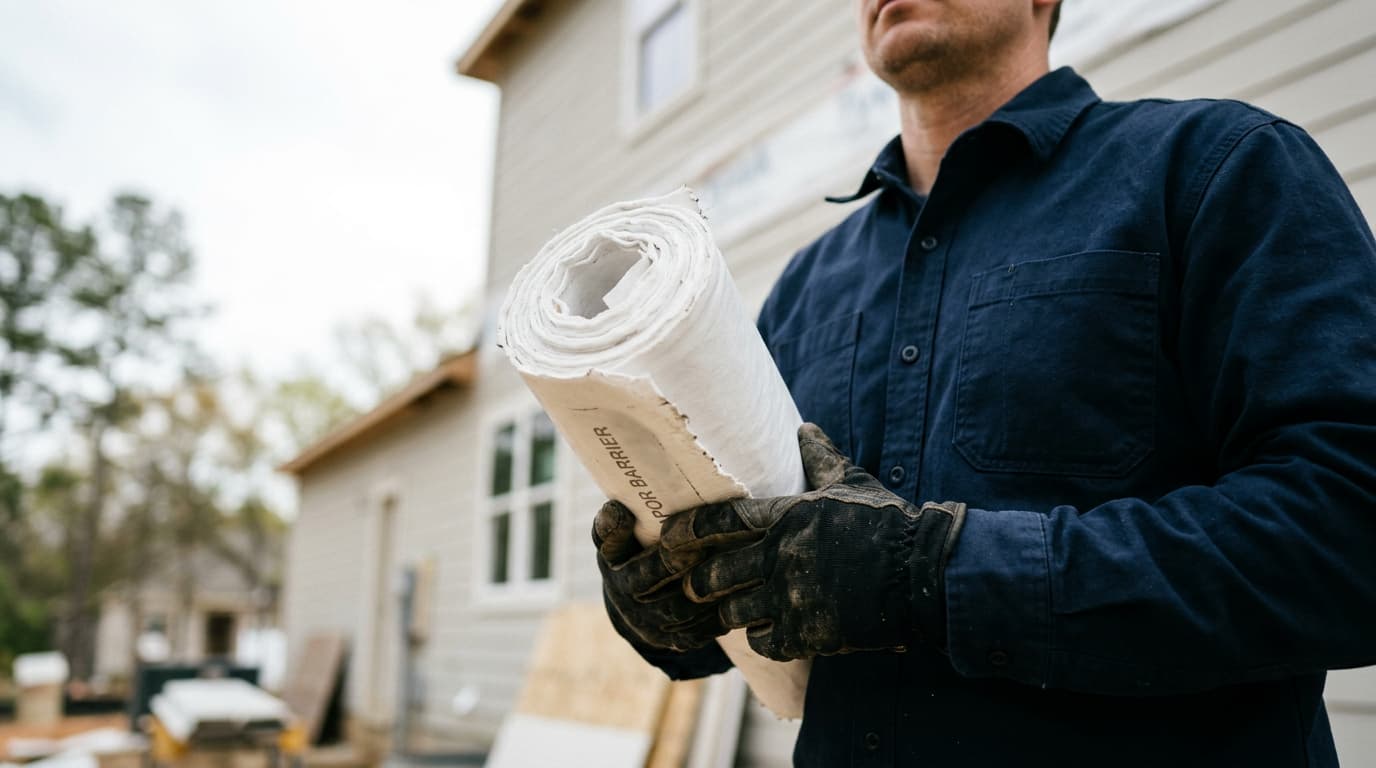
A vapor barrier is exactly what the name says: a barrier against vapor. It is a sheet of polyethylene plastic, typically 6 mils thick, laid flat on the ground of your crawl space. Its job is to slow the rate at which moisture evaporates from the soil and rises into the space above it.
In the right conditions, it does that job reasonably well. If your crawl space has good ventilation, low ambient humidity, and dry soil most of the year, a vapor barrier can be an effective first line of defense. Parts of the country where the air is dry and seasons are mild get by with them for decades.
Oklahoma is not that place. Ada gets around 42 inches of rain per year, with the wettest months running April through June, well above the national average of 38 inches. According to EPA guidance on moisture control, crawl spaces in humid climates require active management to prevent mold and wood deterioration. The clay soil holds water long after rain stops. Summer air is humid enough that even well-ventilated crawl spaces accumulate moisture faster than they release it. A 6-mil plastic sheet on the ground slows some of that, but it leaves the walls open, the air unmanaged, and any water that enters from outside with nowhere to go.
How Encapsulation Works and Why It Goes Further
Crawl space encapsulation treats the crawl space as a controlled environment, not just a space with a sheet of plastic on the floor. The liner is thicker, typically 12 to 20 mils, and it covers not just the ground but the walls as well. Every seam is sealed. The liner wraps around piers and columns. No gaps at the edges where moisture can work around it.
Ventilation is managed, not left open to outside air. In many Oklahoma homes, that means sealing the crawl space vents to stop humid summer air from entering and condensing on cooler wood surfaces. A dehumidifier keeps the interior air at a controlled humidity level year-round. If water infiltration is a recurring problem, drainage channels and a sump pump are added before the liner goes down.
The result is a crawl space that behaves differently from the rest of the outdoor environment beneath your home. Wood stays dry. Insulation performs the way it was designed to. Pests lose the damp, softened wood they need to establish themselves. The floor above the encapsulated space holds temperature better and has a measurable improvement in air quality throughout the home.
Telling the Difference: What to Look For in Your Crawl Space
Open your crawl space access panel and look in. A vapor barrier is a thin, often semi-transparent sheet lying loosely on the dirt. It may have gaps, tears, or areas where it has pulled away from the walls. The walls themselves are bare block, brick, or concrete. Vents are open to outside air.
Encapsulation looks different. Liner is thicker and white or light gray, running up the walls and attached at the top. Seams are taped. The space has a finished appearance, even if basic. Vents may be sealed or covered. There may be a dehumidifier mounted to a wall or sitting on the liner.
If what you see is an old plastic sheet with gaps and no wall coverage, that is a vapor barrier. A degraded, torn, or shifted barrier that has been down for ten or more years in an Oklahoma crawl space is likely no longer effective. A vapor barrier that has been in place for ten or more years in an Oklahoma crawl space has likely been compressed, shifted, and partially compromised by years of foot traffic and soil movement.
When a Vapor Barrier Is Enough and When It Is Not
A vapor barrier can make sense as a starting point in a crawl space that is new, dry, and well-ventilated. If you are building a home in a part of Oklahoma with lower humidity and good natural drainage, a vapor barrier might be the right first step with the understanding that it will need monitoring and eventual replacement.
It is not enough when the crawl space already has moisture problems. Standing water, visible mold, soft wood, or a persistent musty smell means the space needs more than ground coverage. Installing a vapor barrier on top of an existing moisture problem does not fix the problem. It covers it.
For older Oklahoma homes, the calculation usually favors encapsulation. Many homes built before the 1980s were constructed without any vapor barrier at all. Decades of unchecked moisture leave wood in a condition that a thin plastic sheet cannot reverse. Encapsulation stops the ongoing damage and gives the space a chance to dry out.
Cost, Lifespan, and What to Expect From Each
A vapor barrier is less expensive upfront. Material and installation costs are lower, and the job takes less time. But a 6-mil barrier in an active crawl space may need replacement within five to ten years, especially in a climate that puts year-round stress on it. Tears from foot traffic, pest activity, and soil movement shorten that lifespan further.
Encapsulation costs more upfront and takes longer to install correctly. A quality liner with sealed walls and a dehumidifier is a more involved job. The tradeoff is a system that is designed to last 20 years or more and does not need the same level of monitoring. You are not replacing it every few years, just inspecting it periodically to confirm it is holding.
Homeowners who plan to stay long-term and want a solution that does not need repeat attention will find encapsulation the stronger investment. Someone managing a rental or preparing to sell may find a vapor barrier refresh the right short-term call. The decision depends on what the crawl space is currently dealing with and what the goal is.
Questions Oklahoma Homeowners Ask About Crawl Spaces
Can I install a vapor barrier myself?
You can lay a vapor barrier yourself if you are comfortable in a crawl space and the space is dry with no standing water or active moisture issues. Encapsulation is a different scope. Proper liner attachment, seam sealing, vent management, and dehumidifier sizing require experience to do correctly. A poorly sealed encapsulation is not much better than a vapor barrier.
Will encapsulation fix wood rot that is already there?
No. Encapsulation stops new moisture from reaching the wood, but it does not reverse damage that has already occurred. Rotted beams or joists need to be replaced before encapsulation goes in. A crawl space inspection identifies what needs fixing first.
Does encapsulation reduce energy bills?
Yes, for most homes. A damp crawl space pulls heat out of the floor above it in winter and allows humidity to work against your HVAC in summer. Once the space is sealed and dry, floor insulation performs better and the home holds temperature more effectively. Many homeowners notice lower heating and cooling costs within the first year.
My crawl space has a vapor barrier but still smells musty. Why?
The musty smell is mold or mildew growing somewhere in the crawl space, and the vapor barrier is not stopping it. Moisture is likely entering through the walls, through unsealed vents, or because the barrier itself is torn or has gaps. A professional inspection will identify the source. In most cases like this, encapsulation is the path to solving it, not managing it.
Not Sure What Your Crawl Space Actually Has?
Pierman inspects crawl spaces across Pontotoc County and central Oklahoma. We will tell you exactly what is down there, whether it is working, and what needs to change. The inspection is free and there is no obligation to move forward.
Prefer to plan ahead? Request your free Pierman inspection online and we will reach out to schedule.