
Generally, you expect baseboards to, well, run along the floor. When your home begins to develop a gap between the two, it can be worrying. Here are some signs that can help explain why your baseboard and floor are separating.
Questions to Ask When You Have a Gap Between Your Baseboard and Floor
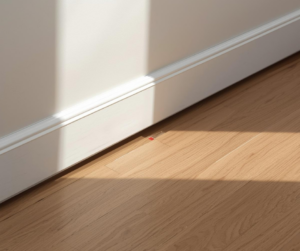
1. Has it always been like this?
Has there been a gap the whole time that you have been in the house? If this is the case it might be something as simple as a poorly installed baseboard or a room designed to have thick carpet run beneath the baseboards.
If you are not the home’s first owner, answering yes to this question won’t rule anything out. Answering no, however, makes it more likely that structural problems with the home are present.
2. How Big is the Gap? Does it Fluctuate?
If the gap is small and only appears during some parts of the year, it could be humidity-related. Humidity can cause floors and trim to expand at different rates. This is not ideal, but also not a sign of a significant structural issue.
3. Is the Wall Separating from the Floor as Well?
If the wall is separating from the floor itself, not just the baseboard, then the issue is likely structural. Chances are, your floor is sagging, causing the gap. If your home has a crawl space foundation, sunken piers and rotting beams and floor joists are among the most likely causes. These prevent the floor from receiving the proper structural support in the affected area.
4. Is the Floor Slanting? Does it Have a Spongy Feel to Walk On?
If your floor is slanting, that could have a number of causes. It could be a construction defect. It could also be a sign of a more serious problem like foundation settlement or crawl space wood rot. Similarly, the floor having a spongy feel near where it is separating from the baseboard is a common sign of weakened beams or joists.
How to Fix Your Baseboard Problems
This in large part depends upon the cause. If it is poor placement during the initial construction, simply redoing the baseboards will likely do the trick. Other problems have more significant fixes.
If the problem is caused by foundation settlement or shifting, you will likely need to have a foundation piering system installed to re-level and support your foundation.
If you have a crawl space foundation, the damaged foundation pieces might need to be replaced. This holds true whether it is a damaged pier or a rotting beam or joist.
While the tips above can point you in the right direction, keep in mind that a professional inspection is still the best way to identify the root cause of this issue.
Want to Know If Your Baseboard Issues Are Structural? Give Us a Call
At Pierman, we are experts at both foundation piering systems and crawl space and pier and beam repairs. If you believe that your baseboards pulling away from your walls might be a structural issue, contact us for a free estimate.
