
When water begins infiltrating your basement, crawl space or foundation slab, your first thought might well be about immediate concerns: cleanup, preventing mold, etc. Soon, though, your thoughts probably will shift to the future, namely what type of waterproofing can stop this from ever happening again?
As much as we’d love to give you a concrete answer, the best we can do is say: It depends.
What Impacts Which Waterproofing Method is Right for You?
Foundation Type
This is perhaps the most crucial, because it can immediately cause some methods to be ruled out.
For our purposes, we’ll focus on the three general types.
- Basement: Basements are the foundation type most associated with waterproofing, and both exterior and interior options exist. Which is correct for your home will depend on other factors.
- Crawl Space: With crawl spaces, the question becomes is the issue just excessive moisture or is there standing water as well. Both are problems, given that even high humidity levels can spur mold growth and wood rot in a crawl space. If the problem is just the excessive humidity, crawl space encapsulation will likely be sufficient. This involves sealing your crawl space, installing a vapor barrier on the walls and floors, and sometimes installing a dehumidifier. If you are also getting standing water, however, in addition to encapsulation you will likely also need a drainage system, either exterior to keep water away from the foundation or an interior drainage system with a sump pump to deal with flooding concerns.
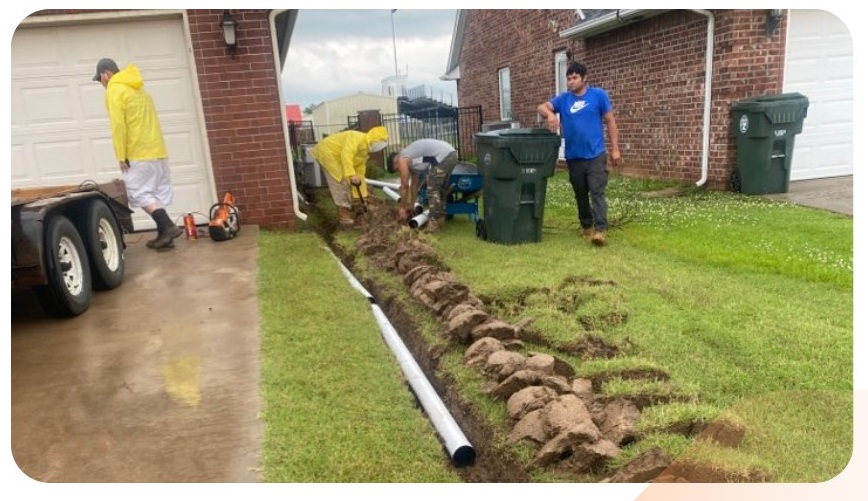
- Slab: If you have a slab on grade foundation and water is entering your living space, almost any significant waterproofing efforts are going to be exterior. This could mean anything from improving your gutters to installing a drainage system in your yard to direct water away from your foundation. Regardless, however, the focus will be on keeping the water away from your home rather than dealing with it once it gets inside.
Is There Other Damage?
Sometimes the same forces that lead to water in your basement can also damage your foundation. One of the most common examples are basement walls that crack and bow because of the hydrostatic pressure being placed on them by the soil.
If you have bowing basement walls, not only will you need to have the wall itself stabilized and the crack filled, but it also would be a good idea to reduce the hydrostatic pressure on the walls. That means an exterior drainage system that can direct water away from your foundation to a point where it can’t damage your home.
Is Grading a Problem
Ideally the grading around your home should cause surface water to run away from your foundation. If the opposite is occurring, some sort of exterior waterproofing might be in order. Whether it is regrading or a French drain, exterior work will be the best bet to solve your home’s water problems.
Do You Have a High Water Table?
Interior drainage systems with sump pumps are very good at handling water entering through the joint between the basement wall and the slab floor, which is a common point of entry when dealing with a high water table. High water tables can also affect crawl spaces and slab foundations as well, although with slab foundations the solution will have to be different because of the foundation type.
Is Your Basement Finished? Do You Have Extensive Landscaping?
While ensuring the waterproofing is effective is the main goal, in cases where either interior or exterior drainage systems would work well, convenience can enter into the conversation.
If your basement is finished (and the water damage isn’t forcing you to rip everything out anyway), an exterior system might be more convenient because of the flooring and drywall that might need to be ripped out to install the perimeter drainage trench.
If you have extensive landscaping, in the area where an exterior drain would run, an interior system could be the more convenient (and almost certainly less costly) option.
Other Waterproofing Concerns
These are far from the only factors at play. Others include cost (interior drainage systems are generally easier to install and less expensive than exterior drains), ongoing maintenance (with interior systems you need to keep the sump pump in good working order) and soil type (because in our business, the soil impacts almost everything).
What is Your Next Waterproofing Step?
Ultimately, you should contact a waterproofing expert that offers both interior and exterior waterproofing solutions. If you live within our Oklahoma service area, a Pierman representative can examine your water issues and give you a straightforward recommendation on how best to solve them. Contact us for a free estimate.
