
When it comes to waterproofing, there is no one-size fits all solution. The system must be designed to solve the specific problems that the home is facing. A key variable in determining waterproofing needs? What type of foundation you have.
Let’s take a look at the best waterproofing methods for each type of foundation.
Basement Foundation
Waterproofing is most often associated with basements, and for good reason. Water intrusion in basements can cause a host of problems and can be very costly, especially if you have a finished basement.
So what is the best type of waterproofing for a basement foundation? It depends partially on the problems, as well as what is causing them. For instance, an interior waterproofing system is not designed to address hydrostatic pressure pushing against your walls. If the water is not only getting into your basement but also causing the walls to crack and bow, exterior waterproofing will be needed.
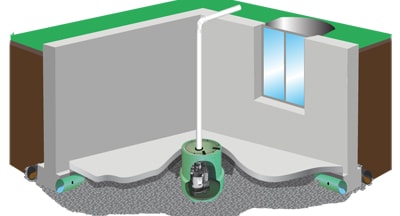
But while exterior waterproofing is best at relieving pressure on basement walls, it is weaker at addressing water pushing into your basement from below. If rising water tables are causing water to leak through your home’s cove joint, an interior system is the best option. An interior drainage system and sump pump can remove the water from your home without it affecting your living space.
Other variables including access, cost and intrusiveness can also come into play, especially in cases where either option would solve the problems at hand.
Crawl Space or Pier and Beam Foundation
The best crawl space waterproofing largely depends on what the primary problem is: humidity or standing water (likely along with humidity). If high levels of humidity are the extent of the problem, crawl space encapsulation is likely sufficient. If standing water is an issue, you might need an interior drainage system and sump pump similar to what you see in basements.
Crawl space encapsulation involves sealing off the crawl space and installing a tear-resistant vapor barrier on the floor and walls to inhibit the flow of water vapor into the crawl space from the ground that surrounds it. In some cases a dehumidifier is installed as well to further regulate the moisture content in the crawl space. Stopping humidity in a crawl space is particularly important because it can cause anything from wood rot to mold and is in an area of unconditioned air that many people rarely check.
Crawl space encapsulation is not effective, however, against large quantities of standing water. In this case a drainage system and sump pump will likely need to be installed inside the crawl space to keep the water out.
Slab Foundation
Slab foundations generally have minimal waterproofing needs. They are less likely to see water intrusion than basements or crawl spaces. That’s not to say that water can’t affect them, however.
While water intrusion can occur in slab foundations, usually the issue is less with water problems and more with foundation problems. Excess water can cause expansion in active clay soils as well as erosion. In cases where standard waterproofing methods such as gutters and downspout extenders don’t stop the problems, an exterior drainage system like a French drain might be necessary to move the water away from your foundation and to a portion of your yard where it can do less damage.
Water Causing You Problems in Oklahoma? Give Pierman a Call
At Pierman, we are highly skilled at each set of waterproofing solution. Whether your crawl space needs encapsulation, your basement needs a sump pump installed or you needs drainage pipe installed in your yard, our waterproofing experts can construct a system that works for your home’s specific problems and foundation. Contact us to learn more.
