Companies use many different products to do foundation repairs. Most have their pluses and minuses (with the latter list being much longer in some cases). But the question remains, what should you look for in a company’s piering system? Here are some tips.
1. Don’t Just Take the Cheapest Piering Option
Some piering options will naturally be less expensive because of the materials used. Unfortunately these systems often involve hoping that fix is sufficient and that the problems won’t come back instead of ensuring that they don’t.
Those involving only concrete often fall into this category. From concrete shoring pads to press piles or poured piers, they are usually less expensive. However, they either rely on spreading the weight of the house across a larger area or hoping that the depth that the concrete reaches is sufficient to support the load of the building. Unfortunately, this leaves the possibility that the piers or shoring pads themselves will begin to settle. If this happens, you are back to square one with the foundation problems, except now you have to work around the previous “fix.”
2. Note How the Foundation Piers Are Attached
When it comes to foundation piering systems, they can be divided into two categories based upon how they are attached to your home. The first is concentric. Basically these piers rest directly underneath the footing of your home and end up supporting it from directly below. This category includes most of the concrete options mentioned above.
This is probably how you envision piers supporting a home from below, and with good reason. It allows for the most efficient load transfer.
The other method is eccentric. With these piers, which include all helical piers and most steel push piers, the pier’s bracket is attached to the side of the foundation footing, often with a shelf running underneath.
Because the eccentric piers are offset by design, they are not aligned with the axis of the load. This places the piers under a greater degree of lateral force, which can increase the possibility of bending or tilting. They must be far more highly engineered, making you more reliant on who the manufacturer is. Even the top of the line ones, however, can’t eliminate these forces completely.
Our Solution: Piering Combining the Strengths of Concrete & Steel
At Pierman, we use a different kind of pier that combines the strengths of each of these methods while negating their weaknesses.
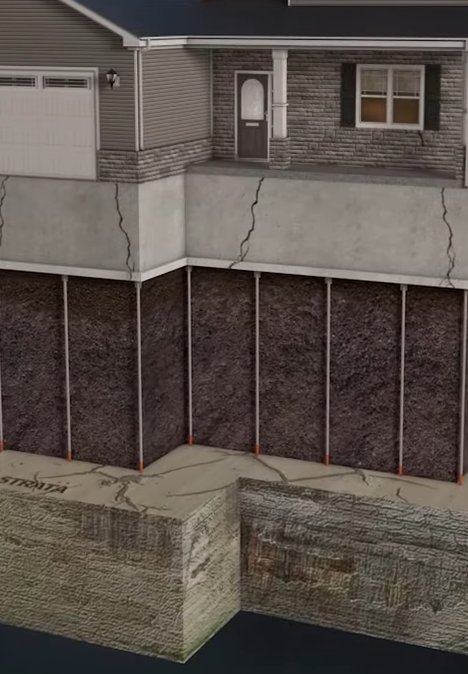
Like steel push piers and helical piers, our utility pier system can reach all the way down to bedrock or a sufficiently strong strata of soil, however deep that may be. Like concrete piers, however, the piers are concentric, supporting your home from directly below the footing.
They also combine the strengths of the two materials, using precast concrete in a steel sleeve for a pier that has the strength you need to support your home. We sink the pier in sections, attaching them together until reaching the needed depth. Our technicians then hydraulically lift the home back to level and attach the pier cap. Even the steel shims used are completely enclosed in the pier cap to avoid any shifting.
Need Foundation Work Done in Oklahoma? Give Pierman A Call
If your home is experiencing foundation problems, you want a company who can get the problem fixed the first time. The last thing you want is for more foundation problems to crop up five years down the road. At Pierman we have the technology to offer a more permanent solution. Contact us to find out more.
